
Screening & De-Gritting
Mechanical Screens
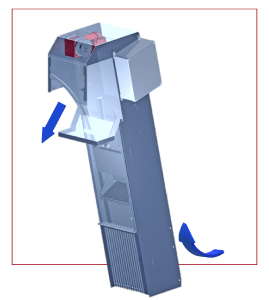
The Mechanical Front Rake Bar Screens are multi-raked, chain operated screens which are generally used as coarse or fine screens for medium and large sized wastewater treatment plants. It is part of the primary filtration flow and typically the first, or preliminary, level of filtration being installed at the influent treatment.
The Mechanical Front Rake Bar Screens typically consist of a series of vertical steel bars spaced between 3 to 25mm or wider, depending on customer preference. High screenings discharge capacity and low head loss is achieved by the help of the multi-rakes. It is properly equipped for the automated removal of solids from all kinds of water and wastewater. Spaced steel bars are used to catch coarse and even fine debris. Debris is removed from the screen field periodically by a continuous traveling rake. These traveling rakes may be activated by a timer, run continuously or run with the signal from a level sensor. Each rake is mounted onto a chain on both sides of the screen frame. The rake’s teeth engage between the bars of the screen field and comb debris upward where the debris is removed mechanically and discharged through the outlet chute into a screw/hydro/belt conveyor which in turn conveys the screenings to a screw compactor or bin. These screens can also be supplied as perforated plate screens with wiper squeegees or perforated filter band screens.
Mechanical Screens
The Mechanical Front Rake Bar Screens are multi-raked, chain operated screens which are generally used as coarse or fine screens for medium and large sized wastewater treatment plants. It is part of the primary filtration flow and typically the first, or preliminary, level of filtration being installed at the influent treatment.
The Mechanical Front Rake Bar Screens typically consist of a series of vertical steel bars spaced between 3 to 25mm or wider, depending on customer preference. High screenings discharge capacity and low head loss is achieved by the help of the multi-rakes. It is properly equipped for the automated removal of solids from all kinds of water and wastewater. Spaced steel bars are used to catch coarse and even fine debris. Debris is removed from the screen field periodically by a continuous traveling rake. These traveling rakes may be activated by a timer, run continuously or run with the signal from a level sensor. Each rake is mounted onto a chain on both sides of the screen frame. The rake’s teeth engage between the bars of the screen field and comb debris upward where the debris is removed mechanically and discharged through the outlet chute into a screw/hydro/belt conveyor which in turn conveys the screenings to a screw compactor or bin. These screens can also be supplied as perforated plate screens with wiper squeegees or perforated filter band screens.
Grit Washers
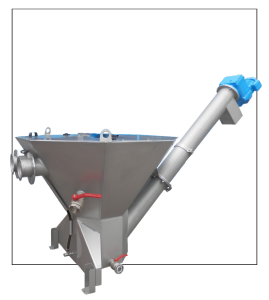
The Grit Washer is used to effectively filter out grit particles and volatile organic material from industrial and municipal wastewater. The effective separation of grit and organic material from process water can be achieved, by the continues flow rotation of the fluid and the agitator that keeps it in motion, enabling grit sedimentation while maintaining suspension of organic material.
The grit washer is designed with a perforated plate, where the grit particle will settle and clean water is introduced to wash the sediment from bottom to top counter current of the flow. A level sensor monitors the level of the grit over the perforated plate and signals the screw conveyor to start. The screw conveyor transports solids up an inclined through for disposal into a waste bin. The organic substances are removed at regular intervals from organic outlet with a motorized valve. The grit washer reduces the weight of wastewater solids up to 90%, reducing less than 3% of the volatile content, reducing solids handling and disposal costs of grit.
Grit Washers
The Grit Washer is used to effectively filter out grit particles and volatile organic material from industrial and municipal wastewater. The effective separation of grit and organic material from process water can be achieved, by the continues flow rotation of the fluid and the agitator that keeps it in motion, enabling grit sedimentation while maintaining suspension of organic material.
The grit washer is designed with a perforated plate, where the grit particle will settle and clean water is introduced to wash the sediment from bottom to top counter current of the flow. A level sensor monitors the level of the grit over the perforated plate and signals the screw conveyor to start. The screw conveyor transports solids up an inclined through for disposal into a waste bin. The organic substances are removed at regular intervals from organic outlet with a motorized valve. The grit washer reduces the weight of wastewater solids up to 90%, reducing less than 3% of the volatile content, reducing solids handling and disposal costs of grit.
Grit Classifiers
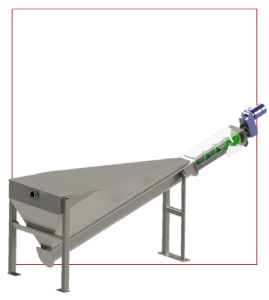
Grit Classifier is used for filtering out unwanted grit from industrial and municipal wastewater, the main function of the Grit Classifier is to separate and dewater grit and other pollutant from the settling area.
Solids are separated from the water starting with the grit pump pumping the grit slurry into the grit classifier. Here the grit settles and the overflow water is returned to the main channel. The settled grit is removed by the screw in the grit separator, and discharged into the waste container. The Grit Classifier reduces the weight of wastewater solids which in return reduce solid handling and disposal costs. The Grit Classifier consist of a stainless-steel body with heavy-duty screw, a wear liner and with a gearbox and motor. Up to 95% separation larger than 200µm, high operating capacity of up to 90m³/h and up to 80% dry grit delivered into a waste container.
Grit Classifiers
Grit Classifier is used for filtering out unwanted grit from industrial and municipal wastewater, the main function of the Grit Classifier is to separate and dewater grit and other pollutant from the settling area.
Solids are separated from the water starting with the grit pump pumping the grit slurry into the grit classifier. Here the grit settles and the overflow water is returned to the main channel. The settled grit is removed by the screw in the grit separator, and discharged into the waste container. The Grit Classifier reduces the weight of wastewater solids which in return reduce solid handling and disposal costs. The Grit Classifier consist of a stainless-steel body with heavy-duty screw, a wear liner and with a gearbox and motor. Up to 95% separation larger than 200µm, high operating capacity of up to 90m³/h and up to 80% dry grit delivered into a waste container.
